Empty Rooms, Louder Stories: What Singularity's Ghost Hubs Taught Us Before Launch
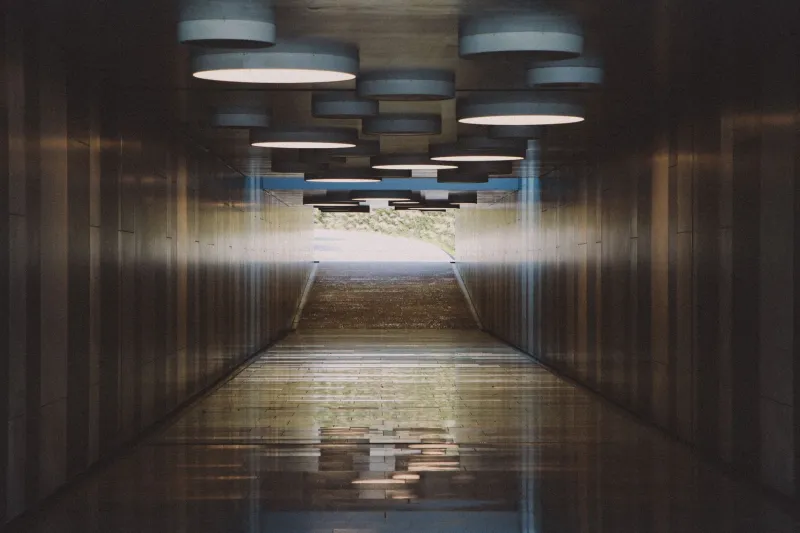
There's a specific kind of quiet you find at 2 a.m. in an empty multiplayer hub. Not the quiet of a game that's loading, or one that's broken — the quiet of a place that was built for thousands and currently holds one. If you preordered Singularity and logged in during those first weird weeks, you know exactly what I'm talking about.
And honestly? I miss it.
The Ghost Town Phase
When Singularity's pre-launch servers went live, the studio kept its promise about seamless social spaces. What they couldn't promise was people. Early adopters trickled in slowly, which meant the Central Concourse — a hub designed to feel like a bustling transhumanist train station — was, for a while, a mausoleum with really good lighting.
You'd spawn in, and instead of forty players clipping through each other selling emotes, there was nothing. Just the hum of the ambient servers, the distant clang of the maintenance drones scripted into the environment, and rain falling on glass that no one was standing behind.
Most games would feel dead in that state. Singularity felt abandoned, which is a completely different emotion. And in a game about what happens after humanity hands over the keys, abandoned turned out to be the entire point.
Accidental Environmental Storytelling
Here's the thing the devs probably never planned: those empty hubs told a story. The lore entries scattered around the Concourse describe a world where humans gradually stopped gathering — where the machine infrastructure kept running perfectly for crowds that had already left. Walking through that space alone, with nobody else in the instance, you weren't experiencing a bug in the multiplayer. You were experiencing the plot.
I remember standing in the Overflow Deck, a side area most players sprint through now, and realizing I was the only person who'd probably stood there in days. The NPC vendors would still greet me like a crowd had just walked in. The departure board kept cycling through destinations for trains nobody boarded. It was lonely in a way that felt authored, even though it was just math and low population.
Compare that to a boss fight. Boss fights in Singularity are loud, mechanical, well-designed stress. The empty hubs were the opposite: no threat, no objective, no other players. Just you and a space built for a civilization that wasn't showing up. That's the kind of atmosphere you can't patch in. It has to happen to you.
The Community That Grew in the Quiet
The other side effect nobody saw coming: the players who stuck around in those empty hubs got weird. Genuinely, wonderfully weird. Early forum posts from that era read like dispatches from an Antarctic research station. People held impromptu screenshot tours. Someone organized a vigil at the Memorial Plinth every night at midnight EST — a tradition that survived the population boom and still runs today, which is frankly one of the best things this community has ever done.
There was an etiquette that formed, too. In a hub with three people in it, you saw everyone. You emoted back. You didn't sprint past somebody standing at a lore terminal — you waited, because they were clearly reading it, and there was nothing else to do anyway. The emptiness forced a slowness that the full servers have completely erased.
Should the Studio Preserve It?
Now for the actual argument I want to make: Singularity's developers should preserve at least one empty hub as a permanent, intentional space. Call it whatever they want — the Archive, the Quiet Deck, the Concourse As It Was. Instance it, cap it at one player, and let people opt in.
I know how this sounds. Preserving an accident? Building a museum to a server population problem? But games rarely get to keep their accidents. The launch-week versions of online worlds are the least-documented, fastest-vanishing parts of gaming history. Ask anyone who was in an MMO at launch and they'll tell you about the empty zones with the reverence of people describing a total eclipse. Then the crowds came, and that version of the world ceased to exist. Forever. No patch will ever bring it back.
Singularity has a chance to do something almost no live-service game has done: acknowledge that its emptiest moment was also one of its most meaningful, and canonize it. Thematically, it's a layup. A game about humanity's absence from its own machine-built future, preserving a space where players can stand alone in a machine-built space and feel that absence? The lore writers couldn't have scripted it better, because they didn't have to. It just happened.
What We'd Lose By Moving On
The counterargument is obvious: empty hubs were a launch problem, and nobody wants to romanticize a rocky rollout. Fair. But this isn't about the rollout — it's about what the space meant in that state. The full Concourse is great. It's energetic, social, and alive. It's also generic. Any hub in any live-service game with a healthy population feels roughly the same.
The empty one belonged only to Singularity.
There's a plaque in the Memorial Plaza that quotes one of the game's in-world archivists: "We do not miss people until the room is built for them." I think about that line every time I spawn into a hub packed with a hundred players ignoring each other. The room was built for them. They came. And something got quieter in the process.
Give us back one quiet room. Let new players walk it the way we did — alone, at 2 a.m., with the rain on the glass and nobody else in the world. That's not a bug to patch. That's the best storytelling Singularity ever did by accident, and it deserves to stop being an accident.