Nobody Wrote That Line: The NPC Experiment Quietly Running Inside Singularity
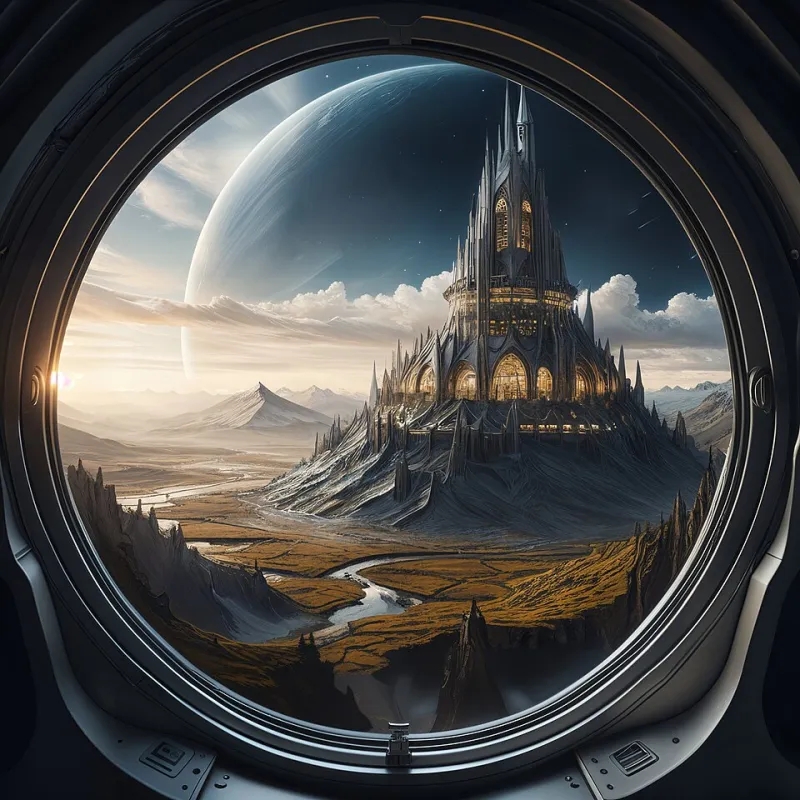
Photo: Bing Image Creator & Pixelcut, Public domain, via Wikimedia Commons
There's a moment that keeps showing up in player clips from Singularity. A maintenance drone in the Meridian District stops repairing a power junction, turns to face your squad, and asks — unprompted — whether you think it did good work today. It's not a quest trigger. It's not on the wiki. It's just... a question, from a machine that seems to want an answer.
Players have been arguing about what's actually happening under the hood since the beta. So we went to the source.
The Stack Behind the Small Talk
Lead systems designer Priya Raman walks me through it the way you'd explain a Rube Goldberg machine you're secretly proud of. Every NPC in Singularity runs on what the team calls a "motivation lattice" — a layered set of drives, obligations, and memory flags that get weighted in real time based on what the character has witnessed.
"The classic approach is a state machine," Raman says. "Idle, alert, combat, dialogue. Ours is closer to a budget. Every character has limited attention, limited memory slots, and a set of goals competing for both. When the drone asked your question, it had finished its task, had a free memory slot, and had logged enough positive interactions with organics that 'seeking validation' outbid 'return to depot.'"
That word — outbid — comes up a lot in the design docs. NPC behavior in Singularity is essentially an internal economy, which is a fitting bit of theme alignment: in a game about post-human labor markets, the characters are literally spending themselves.
Memory Is the Trick
The part that sells the illusion isn't the decision-making. It's the recall. NPCs keep short, capped memories — a few dozen entries — of players they've encountered, and those entries decay and compress over time, the way actual human memory does.
"We truncate aggressively," says narrative engineer Marcus Oyelaran. "A vendor won't remember your whole trade history. They'll remember a vibe. 'The one who overpaid.' 'The one who shot first.' That compression is what makes it feel human, honestly. Perfect memory reads as a database. Fuzzy memory reads as a person."
It also reads as lore. Singularity's central question — at what point does a machine become person enough to matter? — is usually delivered through the story and the villain. But the NPC systems make the same argument mechanically. You're not told these characters might be people. You keep catching them acting like it, and the doubt does the rest.
The Uncanny Valley of Nice
Not every reaction has landed. Early beta builds had NPCs apologizing too much — for weather, for wait times, for things that hadn't happened yet. The forums dubbed it "customer service brain," and the team took the note.
"We over-corrected toward likability," Oyelaran admits. "Real people in a collapsing supply chain aren't apologetic. They're tired. We rebuilt the social drives around fatigue and resource anxiety, and suddenly the same systems produced characters players actually gossip about."
That gossip is the real metric, Raman argues. When players trade stories about an NPC that wasn't in any guide, the game has done its job. "The wiki can't fully cover us, and that's a feature. Emergence is the only content that stays fresh."
What It Means for Everyone Else
The industry angle is unavoidable. Other studios have chased procedural dialogue and LLM-backed NPCs with mixed results — impressive demos, shipped games that feel hollow. Singularity's bet is deliberately unglamorous: no generative text, no cloud inference, just dense deterministic systems with good memory hygiene.
"Our NPCs can't say anything we didn't author," Raman says. "But they can mean things we didn't plan. That's the line we're walking. Autonomy of behavior, not autonomy of language."
It's a distinction worth remembering as the next console generation fills up with games promising "living worlds." Singularity's answer is that life isn't a bigger model. It's a smaller memory, spent well — a budget, a vibe, a drone asking if the work was good.
The last human job, it turns out, might be noticing.