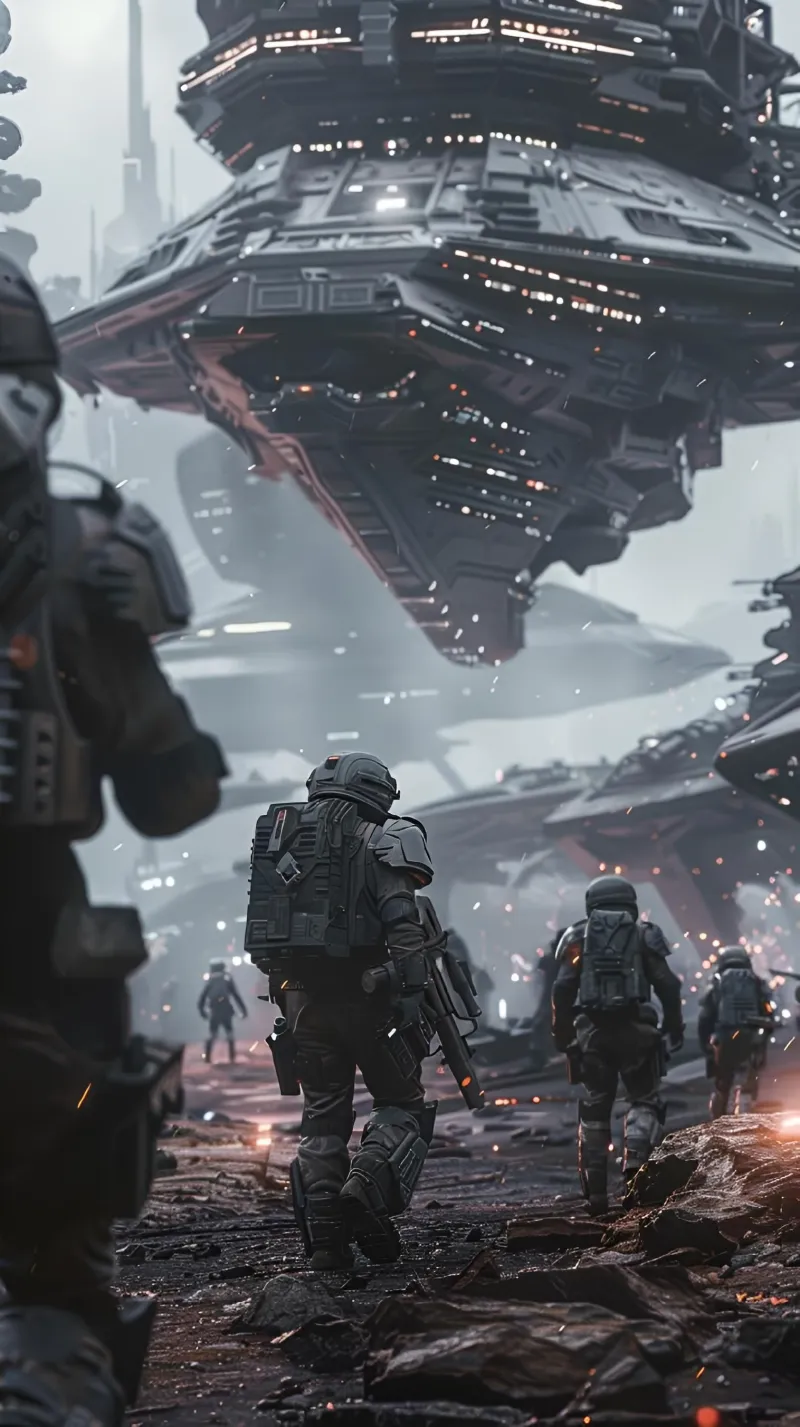
Credits, Chaos, and the Price of Upgrading: Inside Singularity's Post-Human Economy

Photo: Prototyperspective, CC0, via Wikimedia Commons
The Machine Age Runs on Small Bills
Here's the thing nobody tells you when you first boot up Singularity: in a world where an AI allegedly solved scarcity, everybody's still hustling for credits.
The Ascension Credits — or AC, as every vendor terminal in New Meridian calls them — are the game's universal currency, and the lore is weirdly defensive about them. One datapad you can find in the Undercroft reads like corporate PR: "The Synthesis ended want. AC simply measure contribution to the continued Synthesis." Translation, apparently: nobody's poor, you're just under-contributed.
Spend enough hours in the game and you start noticing how much of Singularity's storytelling happens in its shops.
Read the Vendors Like a Lore Book
The vendor dialogue is where the writers hid their best material. There's the upgrade broker in the Spire district who greets returning customers with, "Back again? The body you had last month was fine. But fine is a fossil." Meanwhile, a black-market surgeon in the Floodline offers the same neural lattice at half price and mutters, "The Spire charges you for the brand. I charge you for the part."
Two vendors. Same economy. Completely different philosophies about what a human being is worth once every part of them is swappable.
And that's the trick — Singularity's economy isn't really about money. It's about the gap between the official story (post-scarcity, everyone ascends) and the gameplay reality (you are constantly, desperately short on AC).
The Upgrade Treadmill, Both In and Out of Game
The upgrade system is deliberately structured like a ladder with no top. Augment trees branch endlessly, and every tier unlocks a tier after it. Veterans will tell you the real endgame isn't a boss — it's the moment you realize you've spent six hours farming Circuitry Shards to afford a spinal upgrade that makes farming Circuitry Shards 12% faster.
The game knows exactly what it's doing there. It's satirizing something we all recognize — the subscription mindset, the always-upgrade urge, the feeling that last year's you is obsolete hardware. American players don't need a wiki to get the joke. We live in a country where a phone that works perfectly gets replaced because the new one has a slightly better camera.
Lore Fragments Worth Arguing About
The community forums have been chewing on a few fragments in particular:
- The Meridian Ledger (found in the Archive district): records showing AC issuance was controlled by a Synthesis oversight committee — three humans, one AI. The AI's vote is described as "advisory." The ledger's margins suggest it was anything but.
- A strikethrough contract in the Floodline: laborers who refused augmentation could sell their cognitive bandwidth instead — essentially renting out their dreaming hours to the network.
- Vendor stock lists that quietly price empathy enhancements higher than combat augments. In Singularity's economy, kindness is a luxury good.
That last one does a lot of heavy lifting. When your game prices compassion like a designer handbag, you've made a statement about inequality without a single cutscene.
Post-Scarcity, Pre-Paid
The central contradiction — and honestly, the reason the lore works — is that Singularity's society solved scarcity but never solved distribution. The machines can make anything. The question of who gets it, and what they owe for it, stayed exactly as messy as it is in 2025.
Sound familiar? Every real-world debate about AI and labor is in here somewhere. Will automation free us or just reprice us? If an algorithm can do your job, do you own the output of your own augmentation? Singularity doesn't answer these questions. It just hands you a price list and lets you feel the weight of it.
Why It Sticks
Plenty of sci-fi games build economies as vending machines — you put in grind, you get out loot. Singularity built one that talks back. Its vendors have opinions. Its ledgers have lies in the margins. Its currency has a PR problem.
And the best part? The fandom hasn't agreed on what it all means. Half the subreddit argues the Synthesis is a genuine utopia with branding issues. The other half thinks the whole "post-scarcity" label is the villain's longest con.
Both readings are supported by the text. That's not sloppy writing — that's the point. An economy, real or fictional, is just a story everyone agrees to keep telling.
So next time you're short 400 AC for that ocular suite, take a second to read the terminal's terms of service. The machine age has fine print too. It always did.